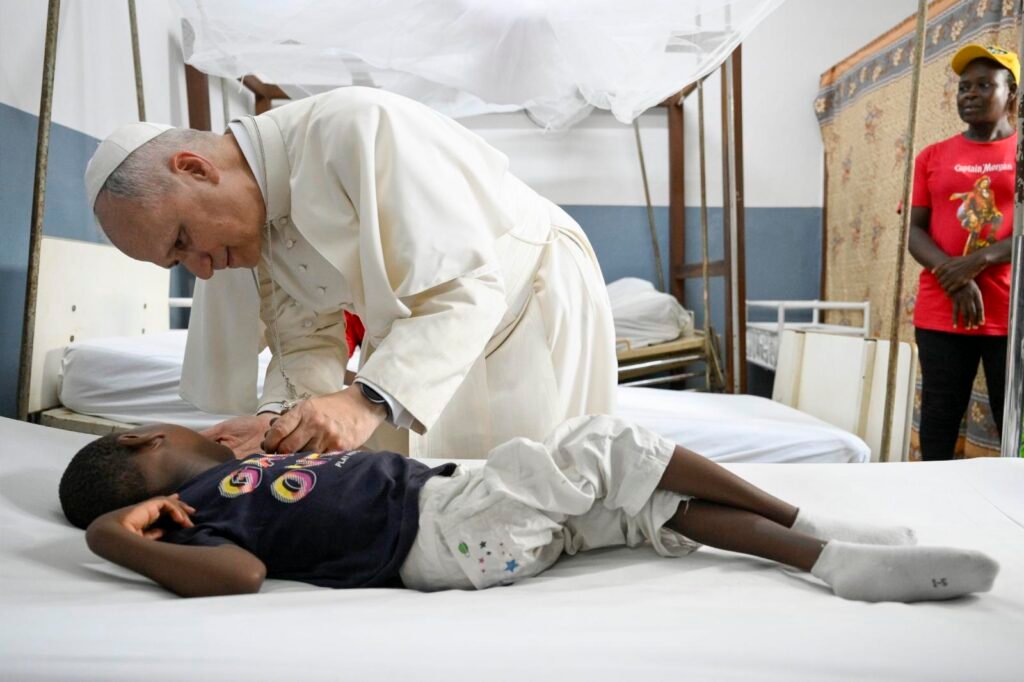
(OSV News) — As Pope Leo XIV pushed back against what he has described as an inaccurate narrative surrounding his first trip to Africa, missionaries working across the continent say the journey reflects something far more fundamental than political debate.
“There has been a certain narrative that has not been accurate in all its aspects,” the pope told journalists April 18, as he traveled between Cameroon and Angola, noting that much of the coverage had become “commentary on commentary.”
On the ground, however, those living the daily reality of the Church in Africa describe a visit centered on themes they know well: fraternity, peace, healing and hope. And all of it — rooted in Christ.
The land of St. Augustine of Hippo
In many ways, the trip is also the fulfillment of a longstanding personal desire. Days after his election in May 2025, Pope Leo had already signaled his intention to travel to Africa — beginning with Algeria, the land of St. Augustine of Hippo, whose thought and spirituality have shaped his own vocation as an Augustinian.
It is also a continent he knows firsthand. Even as bishop of Chiclayo, Peru, the future Pope Leo made repeated trips to Africa, particularly Nigeria, maintaining close ties with missionary communities and developing a pastoral vision shaped by those encounters.
That background helps explain why, as he told reporters mid-flight, he sees the journey in simple terms: “I primarily come to Africa as a pastor … to be with and to celebrate with, to encourage and accompany, all of the Catholics throughout Africa.”
A small Church, a powerful witness
In Algeria, where Christians make up a tiny minority in a predominantly Muslim country, Spanish missionary Mercè Gassiot said that presence — quiet, humble and relational — defines the Church’s mission.
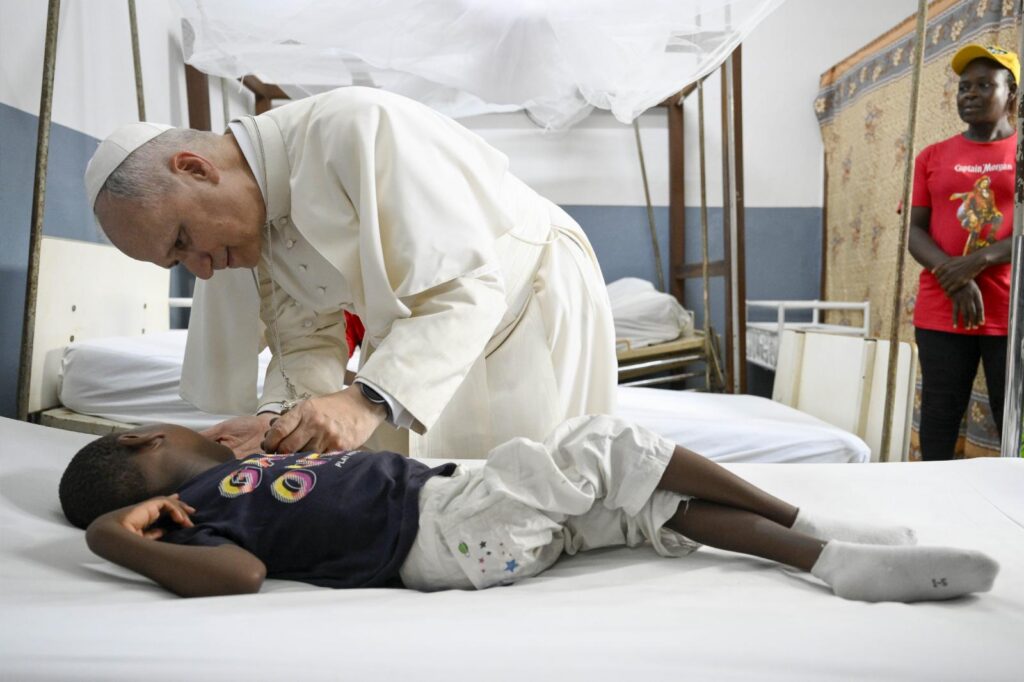
“Our Church is poor, very small, but full of diversity,” said Gassiot, who has lived in the country since 1969. “Fraternity is built day by day, by living together, working together, sharing both the difficulties and the joys of daily life.”
For her, the pope’s emphasis on dialogue and coexistence reflects what Catholics in Algeria already strive to live.
Speaking at the Great Mosque of Algiers, Pope Leo underscored that vision, insisting that “to seek God is also to recognize the image of God in every creature,” and that this leads to learning “to live together with respect for the dignity of every human person.”
Bridge between past and present
He returned to the figure of St. Augustine as a bridge between past and present, telling journalists as he left the country that the saint’s “invitation to search for God and for the truth is something that is very much needed today … for all people.”
That same spirit was visible in Annaba, where Sister Carmen María de Justín of the Little Sisters of the Poor welcomed the pope into a home for the elderly, where nearly all residents are Muslim.
“It was wonderful — he was moved when he saw them,” she said, describing how Pope Leo greeted the residents during his visit.
For the sisters, who have long served in a Muslim-majority environment, the visit was both affirmation and encouragement. “It has been a great reward for our work … it has given us strength to continue,” she told OSV News.
Preparing space to receive the pope
The encounter also reflected the broader response of the local population. “The house was full — full of Muslims,” she said, noting that neighbors helped prepare the space to receive the pope.
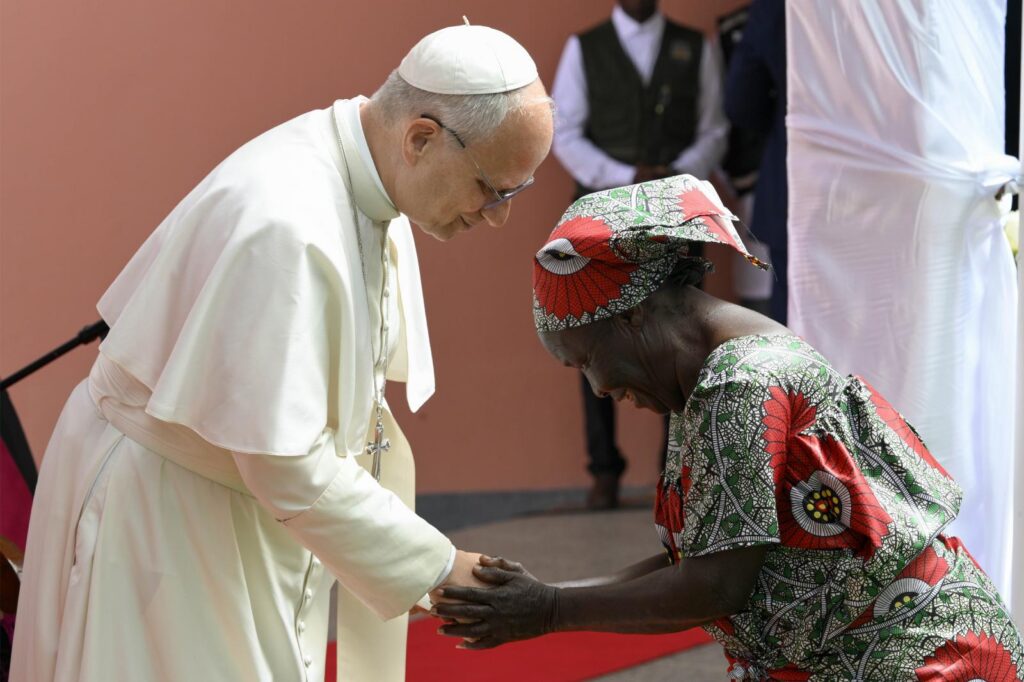
The home even includes a small mosque for residents, “so they can pray just as we do in our chapel,” she said — a daily expression of the coexistence Pope Leo has emphasized throughout the visit.
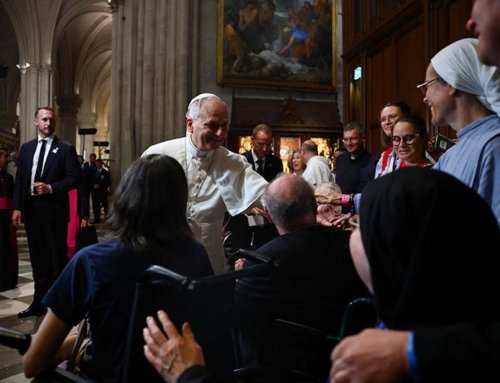
“I think that the Lord, looking down from heaven upon a house like this, where people strive to live together in fraternity, would say, ‘There is hope!’” Pope Leo said in his short remarks at the “Ma Maison” Care Home for the Elderly, where he spent more time greeting each person individually than speaking to them.
“God’s heart is torn apart by wars, violence, injustice and lies. But our Father’s heart is not with the wicked, the arrogant or the proud. God’s heart is with the little ones, with the humble,” the pope said.
Evangelization through friendship
For missionaries like Gassiot and Sister Carmen María, that message of evangelization through friendship resonates deeply in a context where daily life unfolds almost entirely within a Muslim environment. And it’s a life of faith that is cemented on the witness of martyrs, whom the pope honored as well during his visit.
At the Center of Welcome and Friendship run by the Augustinian Missionary Sisters in Algiers’ Bab El Oued neighborhood, the pope met with religious sisters and learned about their ongoing outreach, including educational support, language classes and programs for women.
Reflecting on the legacy of Sisters Caridad Álvarez Martín and Esther Paniagua Alonso — killed Oct. 23, 1994, on World Mission Sunday, while on their way to Mass — Pope Leo framed their deaths within a broader call to witness.
‘Heart of Augustinian life’
“Perhaps what you do here goes much deeper to the heart of what Augustinian life — consecrated life in the Church — should be, in a world where martyrdom is truly needed, but martyrdom in the true sense of the word: witness,” he said.
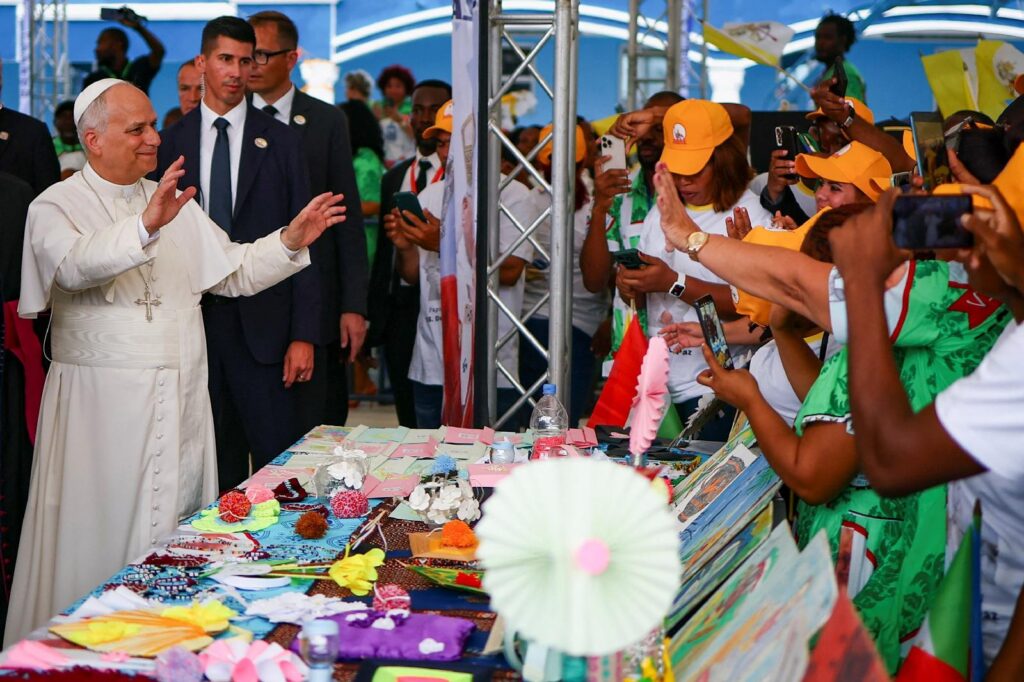
The two sisters are among the 19 martyrs of Algeria beatified in 2018, recognized for remaining alongside the Algerian people despite escalating violence during the civil war that began in 1992.
That decision to stay was not automatic.
“The fundamental question was: What am I going to do personally — stay or leave temporarily?” recalled Sister María Jesús Rodríguez, then provincial superior of the Augustinian Missionary Sisters, who was in Algeria at the time.
As threats mounted against foreigners and Christians, the country’s bishops asked religious people to freely discern their path. “Both options were legitimate and very good,” Sister Rodríguez said, noting the “triple” risk they faced: “for being foreigners, for being Christians and simply for being there.”
Peace in a wounded land
In Cameroon, the pope’s message took on a more urgent tone.
In Bamenda, a region marked by a separatist conflict that has claimed thousands of lives and disrupted daily life for years, Sister María José de la Plata said the pope’s decision to come at all was significant.
“It is a sign of closeness — he is with the people,” she said. “He is willing to take the risk to tell a people who have suffered for years that they are not forgotten.”
She described a reality in which insecurity has become routine.
“We have gotten used to ‘ghost town’ Mondays — no market, no school, no transport,” she said, referring to weekly shutdowns imposed amid the conflict.
Yet even in that context, she told OSV News, the mission continues.
‘In this corner of the world’
“Every day that we open the school or the center, despite the risks, we offer hope and the presence of God in this corner of the world.”
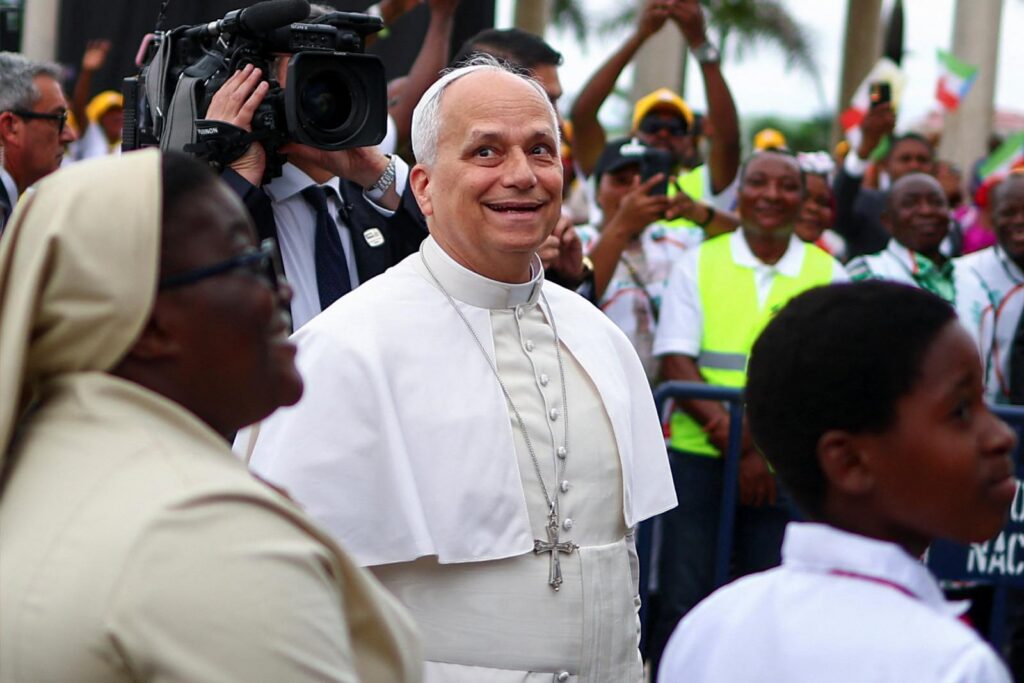
Addressing the community, Pope Leo acknowledged the suffering while highlighting their resilience, calling the region a “bloodstained yet fertile land.”
“Peace is not something we must invent,” he said during the peace meeting on April 16. “It is something we must embrace by accepting our neighbor as our brother and as our sister.”
For de la Plata, the visit itself carries a message: that the conflict has not been ignored, and that the Church remains present.
Healing wounds and restoring dignity
In Angola, missionaries say the pope’s focus on healing and justice speaks directly to the country’s past and present.
After a 27-year civil war that ended in 2002, many of the wounds remain — economic inequality, fragile infrastructure and communities still recovering from decades of violence.
Sister María José Valero, a member of the Daughters of Charity, described a mission that spans schools, health centers, prison ministry and pastoral outreach.
“Our mission here includes education, health care and accompanying people in all aspects of life,” she said, pointing to the wide-ranging needs of the population.
Pope Leo echoed that reality in his address to civil authorities in Luanda April 18, warning against economic systems that reduce people to commodities and calling for a development model rooted in human dignity.
‘Necessary to break cycle of interests’
“It is necessary to break this cycle of interests, which reduces reality, and even life itself, to mere commodities,” he said.
At the Marian shrine of Mama Muxima — a place of deep spiritual significance, but also tied to the history of the transatlantic slave trade — Pope Leo connected faith with concrete responsibility.
“Praying the Rosary … commits us to loving every person … and to dedicating ourselves to the good of one another, especially the poorest,” he said.
For missionaries on the ground, that connection between prayer and action reflects the daily work of the Church.
Faith lived from a distance
In Equatorial Guinea, even though the welcome of those who could attend was tremendously enthusiastic, in remote areas far from the capital, many Catholics were not able to attend events or even follow them through local media.
Five decades of a tyrannical government of Teodoro Obiang Nguema Mbasogo, who seized power from his uncle in 1979, has left the country with limited infrastructure, including access to TV or streaming services.
Sister Concepción González, who works in a rural community, described the visit as something lived “from a distance — a physical distance, and other kinds of distance as well.”
“Many people here will not even be able to see it,” she said.
Yet the need for hope is no less urgent.
Hope needed in world of health
“If hope is the last thing to be lost, then perhaps it is most needed in the world of health, where many arrive too late,” she said. “Children are happy, but sometimes you can see in their eyes a shadow — something that speaks of a different and better life.”
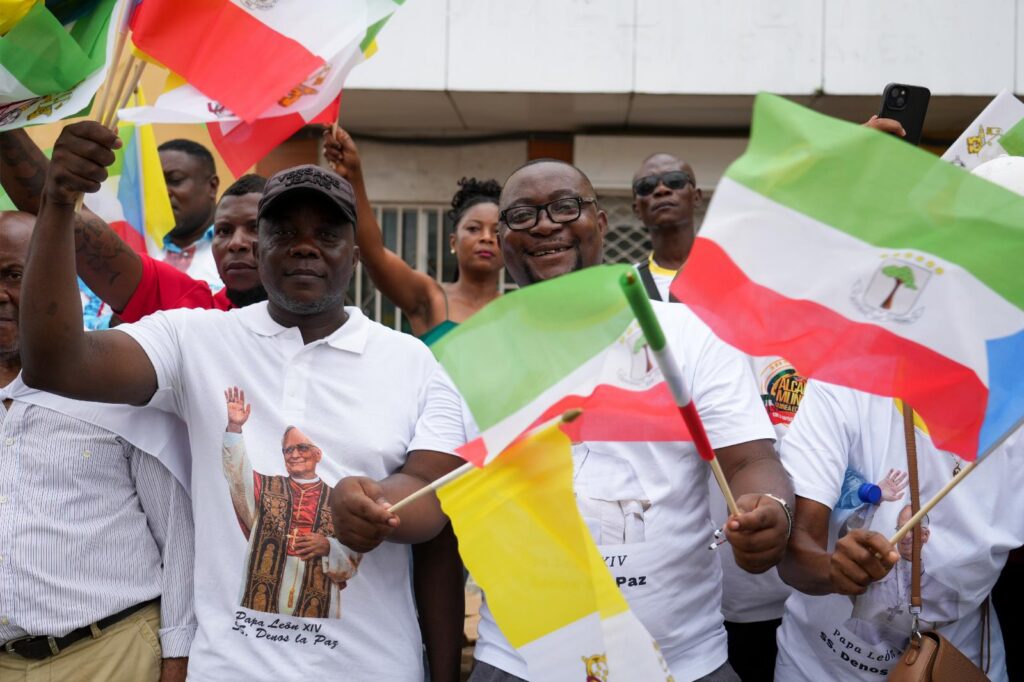
Even so, she hopes the pope will carry their reality with him beyond the brief days of the visit.
“I would ask him to take with him a piece of what he sees here… and to present it to the Lord,” she said.
Pope Leo said in eastern Mongomo, in the Basilica of Immaculate Conception, that the motto chosen for his visit: “Christ, Light of Equatorial Guinea, Towards a Future of Hope,” points to “perhaps … the greatest hunger today” in the country.
“There is hunger for a future imbued with hope that is capable of engendering a new sense of justice and producing fruits of peace and fraternity.”
For the missionaries living in Africa, the pope’s visit did not introduce a new agenda but reaffirmed that their pastor is with them, understands their struggles and empowers their hopes.
Ines San Martin writes for OSV News from Rosario, Argentina. She is the editor of Mission Magazine, a publication of the Pontifical Mission Societies USA.
The post See what missionaries say Pope Leo’s Africa trip was (really) all about first appeared on OSV News.