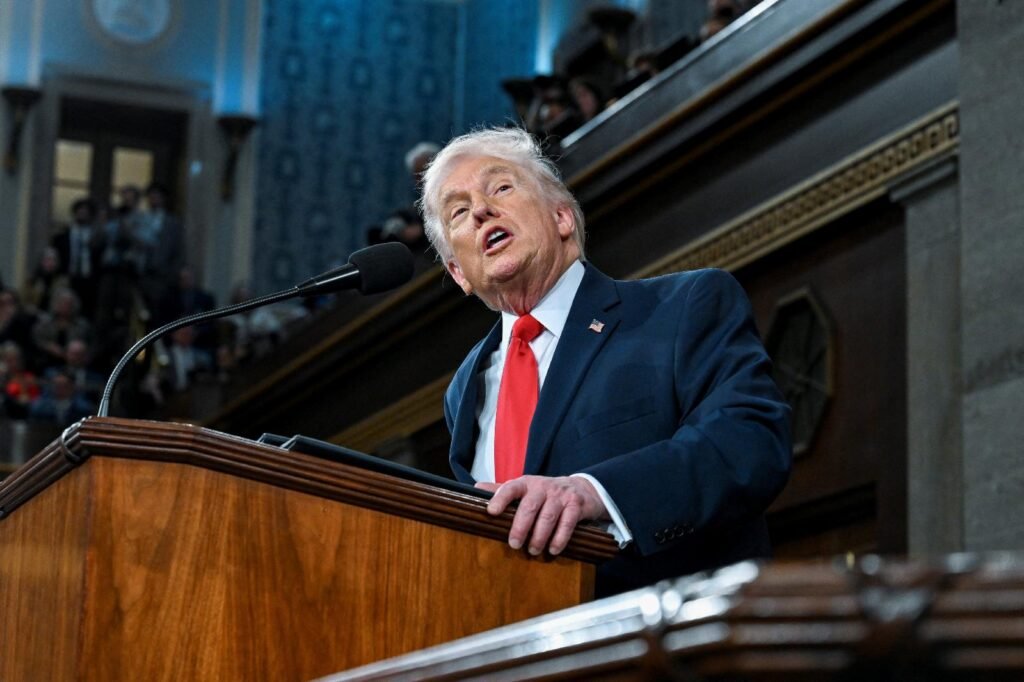
WASHINGTON (OSV News) — President Donald Trump delivered Feb. 24 the first State of the Union address of his second term, as Congress remained at an impasse over funding for the Department of Homeland Security.
The same week in Washington, an international religious freedom watchdog called for the addition of Turkey to the government’s list of countries of particular concern, and lawmakers prepared to consider the 2026 Farm Bill.
State of the Union touts border security as bishops urge reform
In his address, Trump touted his immigration policy in a pitch to midterm voters for his fellow Republicans. But the speech came as more U.S. adults grow skeptical of aspects of his immigration policy, and his comments largely centered around border security, rather than deportation.
A trio of national polls released in February found majorities of Americans said enforcement actions by U.S. Immigration and Customs Enforcement, or ICE, have gone too far, or found that minority shares said they approve of Trump’s handling of immigration.
In his speech, Trump touted what he called “the strongest and most secure border in American history,” but said “we will always allow people to come in legally, people that will love our country and will work hard to maintain our country.”
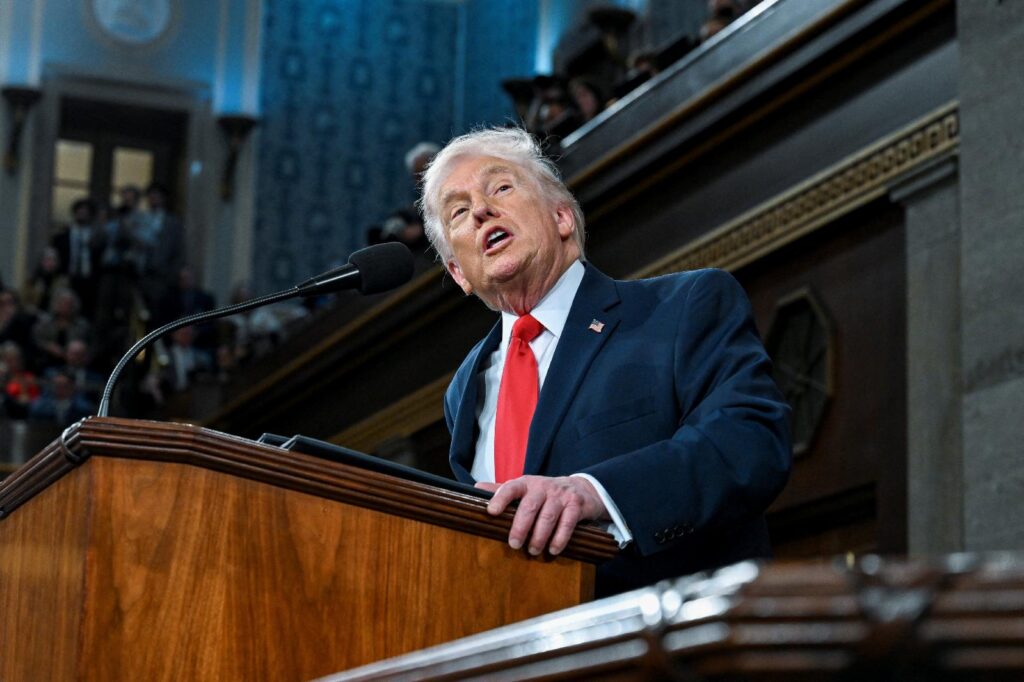
However, the president did not depart from a hardline tone, arguing, “The only thing standing between Americans and a wide-open border right now is President Donald J. Trump and our great Republican patriots in Congress.”
In a statement issued hours before the speech, a group of U.S. bishops urged several reforms to immigration enforcement, including ensuring families of mixed immigration status are not separated, citing the unnecessary harm done to their children, and that sensitive locations such as houses of worship, schools and hospitals are protected from enforcement actions.
Trump made no mention of abortion in State of the Union address
Although Trump mentioned his efforts to increase access to in vitro fertilization — a form of artificial fertility treatment opposed by the Catholic Church on the grounds that it often involves the destruction of human embryos, among other concerns — Trump did not address the topic of abortion in his speech.
Some pro-life advocates, such as Jennie Bradley Lichter, president of the March for Life Education and Defense Fund, expressed disappointment that the topic of abortion was not mentioned in the president’s address.
In a series of posts on X, Bradley Lichter argued that while the Trump administration “has a pro-life policy record that it should be touting,” such as stripping some taxpayer funds from Planned Parenthood for one year and an expansion of the Mexico City policy — which prohibits taxpayer funding for groups that perform elective abortions overseas — to include U.S.-based NGOs operating abroad, “there is still a robust list of pro-life policy goals left to tackle.”
Bradley Lichter pointed to the reinstatement of stronger restrictions on mifepristone, a pill commonly, but not exclusively, used for early abortion, as among key remaining policy priorities.
“This must be an urgent agenda item,” she said of that policy.

Congress remains at an impasse over DHS funding
DHS funding remains lapsed after the U.S. Senate on Feb. 24 did not advance a House-passed measure to fund the department.
In January, lawmakers ended a brief, partial government shutdown, agreeing to pass most outstanding appropriations bills but only a two-week extension for DHS to allow negotiations for new, stronger constraints on federal immigration officers after federal agents killed two American citizens in Minnesota in separate incidents.
But funding for DHS lapsed Feb. 13 when lawmakers left Washington without a resolution for a scheduled recess. However, negotiations remain stalled amid disagreement on what those new constraints would entail.
In his State of the Union address, Trump called the lapse in DHS funding “another Democrat shutdown.”
But Senate Minority Leader Chuck Schumer, D-N.Y., told reporters Feb. 24 Republicans and the White House are “not negotiating. They’re just trying to pass paper back and forth with no real changes.”
Religious freedom watchdog calls for addition of Turkey as country of particular concern
The U.S. Commission on International Religious Freedom reiterated on Feb. 26 its call for the U.S. State Department to place Turkey on its Special Watch List for what it called “severe violations of religious freedom.”
Vicky Hartzler, the chair of USCIRF, an independent, bipartisan U.S. federal government commission that monitors religious freedom around the globe, said in a statement, “Turkey’s arbitrary labeling of foreign-born Protestant Christians as national security threats is meant to intimidate the Christian community and prevent them from gathering for worship.”
“Everyone,” she said, “regardless of residency status, has the right to freedom of religion or belief under international law.”

“The U.S. administration should maintain the momentum President Trump made in his September meeting with President Erdogan and push for tangible improvements to Turkey’s religious freedom record, including an end to its repressive tactics against Christians,” Hartzler added.
A European Parliament resolution earlier in February said the body “strongly condemns the targeted expulsions of foreign journalists and foreign Christians carried out under unsubstantiated national-security pretexts and without due process.” Turkey’s Ministry of Foreign Affairs has denied the claims.
“We welcome steps European bodies have taken to hold Turkey accountable for its systematic violations of religious freedom,” USCIRF Vice Chair Asif Mahmood said in a statement. “We urge the U.S. government to prioritize freedom of religion or belief as part of its bilateral relations with Turkey and raise with Turkish government officials the obstacles to religious minorities’ access to houses of worship and clergy, such as barriers to continued legal residency and restrictions on clerical institutions including the Theological School of Halki.”
Lawmakers prepare to consider 2026 Farm Bill
As lawmakers prepare to consider the 2026 Farm Bill in March, also known as the Farm, Food, and National Security Act of 2026, major agriculture policy legislation, Catholic leaders expressed concern that “the current proposal falls short of the Farm Bill’s historic bipartisanship.”
A Feb. 20 letter from the U.S. Conference of Catholic Bishops chairs of its domestic and international justice committees, as well as representatives from groups including Catholic Charities USA and Catholic Rural Life, to the chair and ranking member of the House Agriculture Committee argued that the current text “does not sufficiently strengthen or modernize the Supplemental Nutrition Assistance Program (SNAP), our nation’s core nutrition program.”
The letter also pointed to resources for rural development, conservation, as well as international food assistance programs, as other remaining points of concern.
The legislation is scheduled for a markup on March 3.
Kate Scanlon is a national reporter for OSV News covering Washington. Follow her on X @kgscanlon.
The post Washington roundup: State of the Union; Turkey religious freedom concerns; bishops flag Farm Bill first appeared on OSV News.