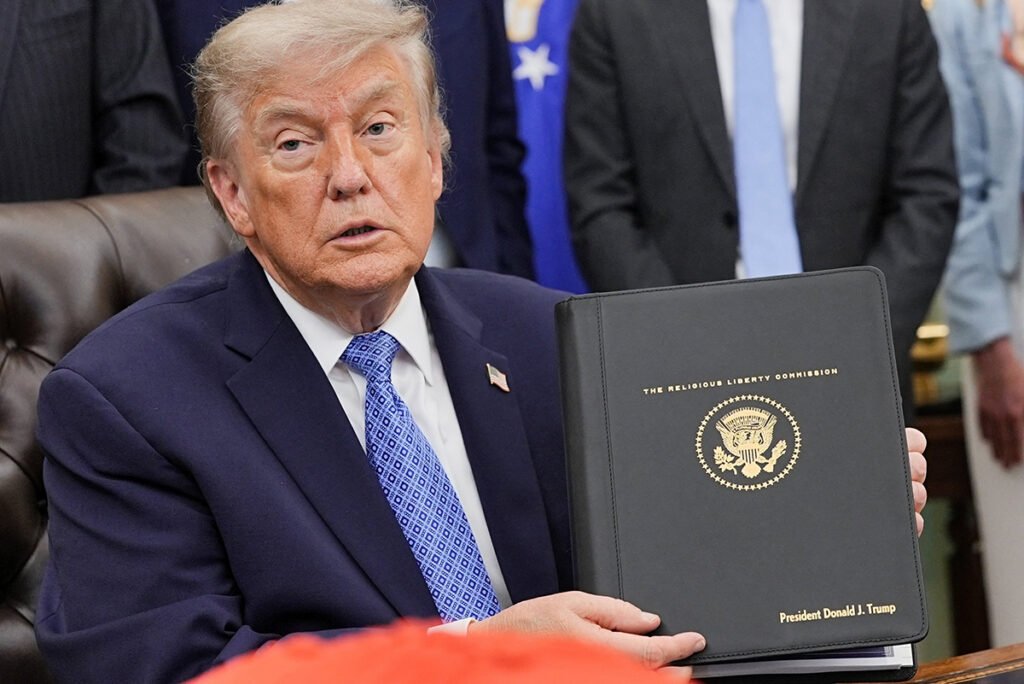
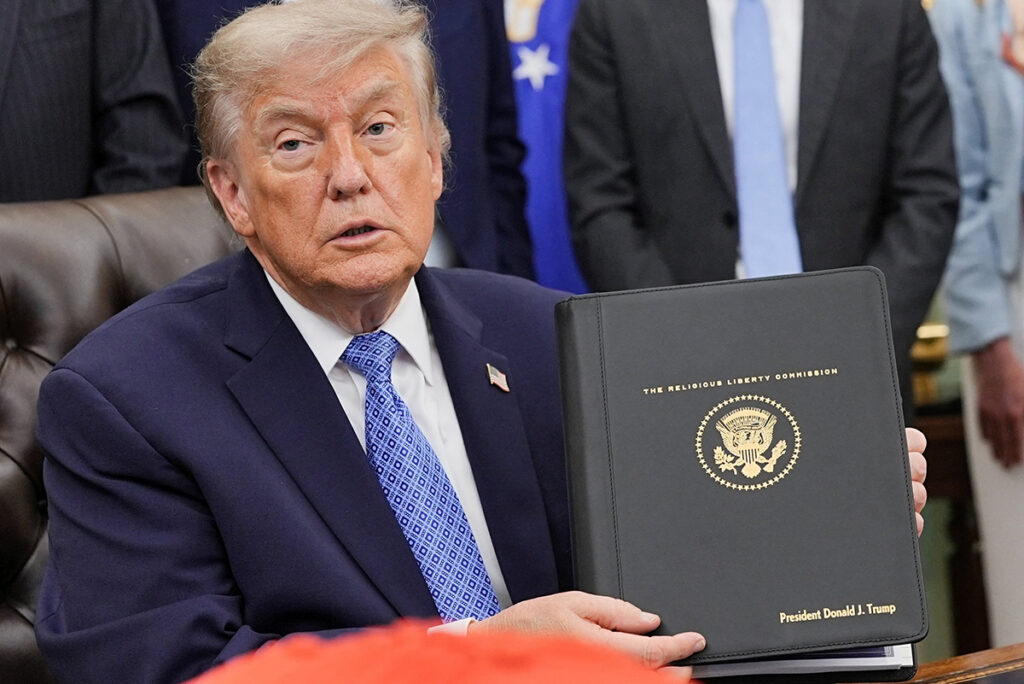
WASHINGTON (OSV News) — The Department of Justice’s Religious Liberty Commission on June 26 presented a draft of its report to President Donald Trump, in the Oval Office.
“We will closely study this report that is being presented to me as president today,” Trump said at the presentation, vowing his administration would work toward “protecting religious liberty for all Americans.”
Trump previously said during comments at the Faith & Freedom Coalition’s 2026 Road to Majority Conference that the draft would be presented to him later that afternoon.
The draft report, shared the same day by the DOJ, makes several policy recommendations, notably advising the president to “instruct the Department of Justice to issue guidance clarifying the proper understanding of the Establishment Clause and separation of church and state.”
“The Commission’s findings point toward a common challenge,” the draft report stated. “People often use the metaphor ‘wall of separation of church and state’ to justify excluding religious Americans from equal participation in the public square. But the ‘wall of separation’ phrase does not appear in the First Amendment or anywhere else in the Constitution. What the First Amendment does say about the relationship between religion and the government is that ‘Congress shall make no law respecting an establishment of religion, or prohibiting the free exercise thereof.’”
The draft argued that in “practical terms, that means that the government may not officially prefer one religion over another, take over the functions of a church, or coerce religious observance,” and that the term “wall of separation” “only took off in the mid-twentieth century, when the Supreme Court began citing Thomas Jefferson’s 1802 letter to the Danbury Baptist Association, written 10 years after the First Amendment was ratified.”
Draft report recommends to streamline religious accommodation process
However, the draft does not address some of the specific cases the commission heard testimony about during its hearings, including state laws requiring clergy to report child abuse or neglect without exceptions for clergy-penitent privilege, and an effort by an Indigenous coalition seeking to protect its sacred site at Oak Flat in Arizona, previously on federal land, from destruction by a copper mining giant.
The draft does make recommendations on other key topics the commission heard testimony on, including preventing violence against houses of worship, combating antisemitism, protecting the ability of faith-based organizations to participate in public-private partnerships and grants, and protecting religious freedom for members of the armed services.
The draft recommends that the president order the War Department, a moniker for the Department of Defense, “to streamline and improve the religious accommodation process,” citing the importance of protecting the chaplaincy and religious accommodations for service members, such as dietary restrictions.
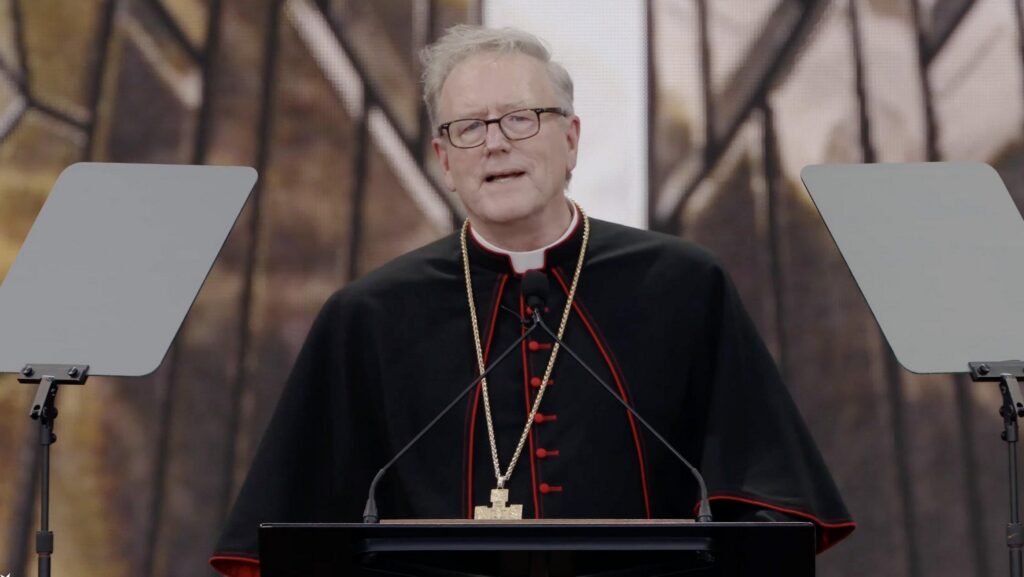
Commission member Bishop Barron quoted in draft report
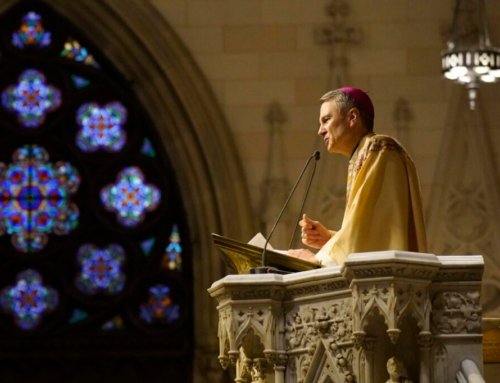
On the issue of protecting the ability of faith-based organizations to participate in public-private partnerships, the draft quoted comments made by commissioner Bishop Robert E. Barron of Winona-Rochester, Minnesota, at one of their hearings that “we must also be vigilant with respect to religious social service organizations such as Catholic charities that receive federal funding.”
Bishop Barron said in comments in the Oval Office that “no one on this commission wants an established religion, but we all want the free exercise of religion. We sense that being limited in different ways.”
The draft also makes recommendations to the president to direct the Department of Justice, the Department of Health and Human Services, and the Equal Employment
Opportunity Commission to issue “Know Your Rights” posters for in settings like public schools, hospitals, and other applicable settings about religious accommodations, as well as the creation of “reporting hotlines/online portals” for allegations of violations.
Also commenting on the draft in the Oval Office was Texas Lt. Gov. Dan Patrick, chair of the Religious Liberty Commission. “After 103 witnesses, after seven months of testimony, after 200 pages of testimony that we’re delivering today, we found there was one constant theme,” he said, arguing the phrase “separation of church and state” had been weaponized, emphasizing their recommendation for guidance from the DOJ.
What does the Religious Liberty Commission do?
When it established the commission in May 2025, the White House said, it was tasked with producing “a comprehensive report on the foundations of religious liberty in America, strategies to increase awareness of and celebrate America’s peaceful religious pluralism, current threats to religious liberty, and strategies to preserve and enhance protections for future generations,” and that some of its areas of focus include school choice and conscience protections.
However, the Religious Liberty Commission has also been a source of controversy. Carrie Prejean Boller, a former Miss California USA, was removed from the commission after a Feb. 9 hearing, which aimed to examine a rise in antisemitism where Prejean Boller, a Catholic, initiated some combative exchanges with Jewish American witnesses.
Prejean Boller claimed on social media that she was removed from the commission due to her Catholic beliefs, a claim disputed by other commissioners, notably Bishop Barron and Cardinal Timothy M. Dolan, retired archbishop of New York.
A federal lawsuit — also filed Feb. 9 — by a multifaith coalition including Muslim, Hindu and Sikh organizations challenged the creation of the commission. It argued the commission was “ostensibly designed to defend ‘religious liberty for all Americans’ and celebrate ‘religious pluralism,’ it actually represents only a single ‘Judeo-Christian’ viewpoint.”
In response to a question about how the report would lead to change, Trump said, “They’ve made some very strong recommendations, and now we have to convince people to adhere by those regulations.”
Kate Scanlon is a national reporter for OSV News covering Washington. Follow her on X @kgscanlon.
Story updated June 26 at 4:45 p.m. ET
The post Religious Liberty Commission draft report recommends DOJ guidance on Establishment Clause first appeared on OSV News.