DENVER (OSV News) — When Deacon Ernie Martinez took on his role as director of deacons for the Archdiocese of Denver three years ago, he brought with him an insight few clergy possess: 40 years of experience with the Denver Police Department, where he witnessed firsthand how peer support could save lives.
That experience has now translated into what organizers believe is the nation’s first diocesan-sponsored clergy peer support and resiliency initiative, a program designed to address the often-invisible weight carried by those who minister to others.
‘I’ve got your back’
“No one survives this vocation alone,” said Deacon Martinez. “In law enforcement, we say, ‘Watch your six’ — I’ve got your back when you can’t see what’s coming. In the church, we say something older and holier: ‘Love one another as I have loved you.’ Different language, but the same mission.”
The program was launched in January with a four-day foundational certification training led by John Nicoletti, an internationally recognized clinical psychologist who has spent more than 40 years developing peer support systems for first responders. Close to 35 deacons from Denver and two from Colorado Springs completed the training, along with four priests.
Training with first responders
Father Brad Noonan, pastor of Our Lady of the Pines Parish in Black Forest, who has been a priest for 27 years and serves as both a fire chaplain in the Colorado Springs area and police chaplain for Parker, also participated in the training. He had completed similar peer support training with Nicoletti 17 years ago for the Castle Rock fire and police departments, giving him unique insight into how the model translates across professions.
Father Noonan called it “a remarkable gift” that the program garnered support from both Denver Archbishop Samuel J. Aquila and Colorado Springs Bishop James R. Golka. “We’re blessed to have Archbishop Aquila and Bishop Golka, who care about their priests and deacons,” Father Noonan told Denver Catholic, the archdiocesan news outlet.
Spiritual dimension of peer support
During the training, Archbishop Aquila addressed participants, emphasizing the spiritual dimension of peer support and the reality of the struggles clergy face.
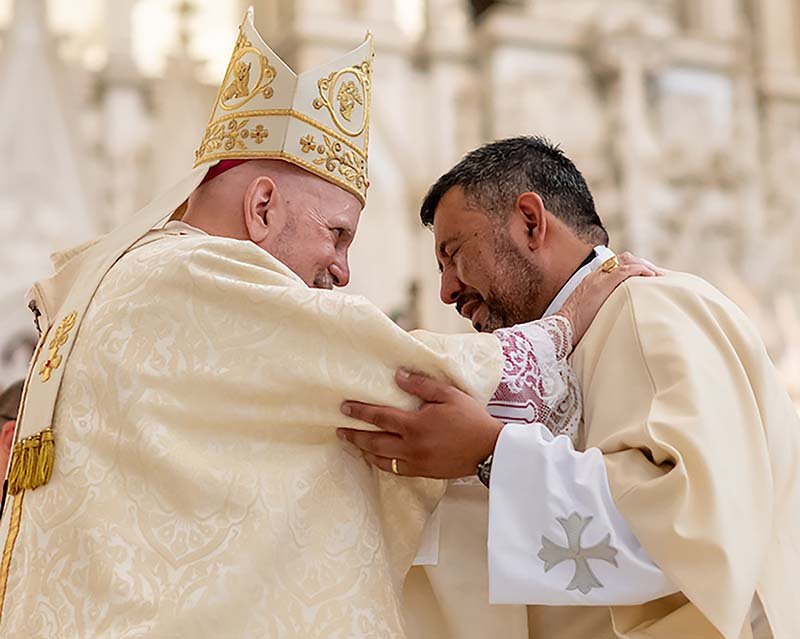
“As brother deacons, as brother priests, they just need, at times, someone to really listen to them because they can get so caught up in the darkness that they don’t think there is any hope,” the archbishop said. “The devil will put into their heads that there is no hope, or it’s impossible for God. … But in Christ, there is always hope, and that is what you need to focus on.”
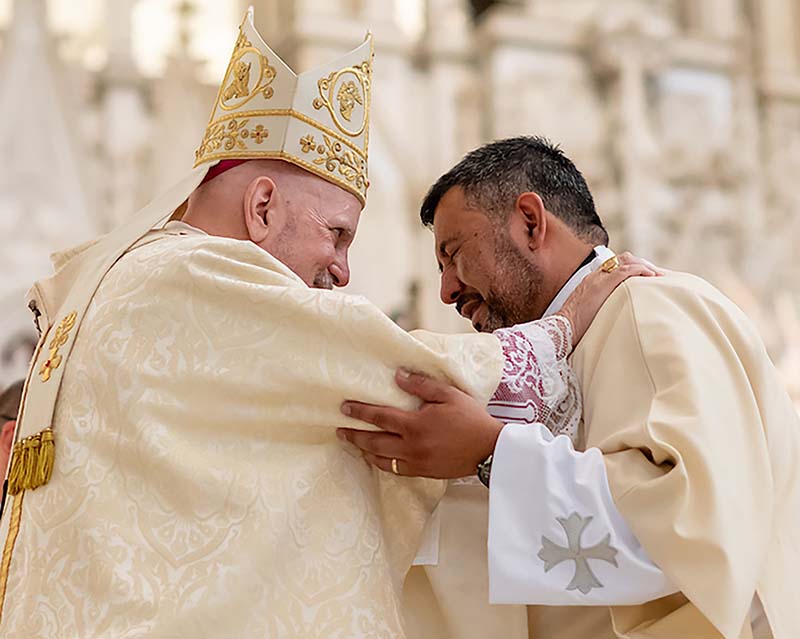
(A few weeks after the program began, Pope Leo on Feb. 7 named then-Bishop Golka to succeed Archbishop Aquila, 75, whose resignation was accepted by the pope the same day. The new archbishop will be installed March 25)
For Deacon Joe Hensley, serving at St. Jude Parish in Lakewood, the program addresses a critical need he has witnessed throughout his ministry.
Expectations for clergy
“The expectations for clergy are very different,” Deacon Hensley said. “Sometimes we make deep connections with parishioners, and when somebody passes, it can be real grief. You have to figure out how to process that grief you’re feeling, or the grief you’ve absorbed from the situation.”
Deacon Hensley, who has served as a deacon while balancing professional responsibilities, noted that clergy often face what he calls “grief fatigue,” the cumulative emotional toll of walking with people through their worst moments. The new program aims to help clergy face that “fatigue” with on-the-ground resources from fellow clergy, in addition to the institutional support already offered.
Father Matthew Book, vicar for clergy in the Archdiocese of Denver, sees the program as addressing a destructive pattern that can develop among clergy.
‘Showing support to a brother’
“There can be kind of a negative circle where a guy struggles, and then he isolates, and then in his isolation, he struggles even more, and it just clamps down and gets harder and harder,” Father Book said. “This peer support initiative reverses that, where, by showing support to a brother with a fellow peer, they’re getting broken out of that isolation.”
The program differs from traditional employee assistance programs or counseling referrals. Drawing on the model developed by the Denver Police Department, which established a formal peer support system program in 1982, the training equips clergy to recognize behavioral indicators of stress, understand trauma responses and provide confidential support to their brothers in ministry.
Deacon Mike Magee, deacon at Our Lady of Loreto in Foxfield, who was ordained in 2009, sees the program as addressing both acute crises and daily challenges.
Learning to reach out, follow up
“It heightens my awareness of trying to be intuitive to my brothers,” Deacon Magee said. “Someone might mention stress at work, fears about layoffs, worries about paying bills. The training helps me not just leave it at ‘Good luck with that,’ but to reach out weeks later and say, ‘Hey, how’s it going? You need some resources?’”
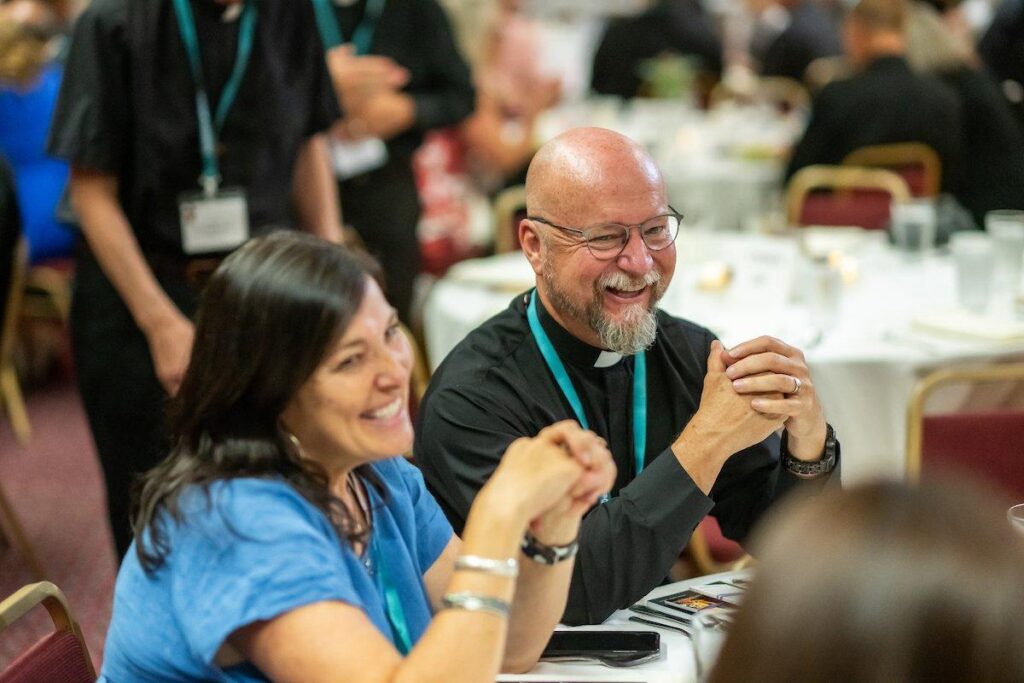
Deacon Magee, who also ministers at Arapahoe County Jail and a state youth correctional facility, emphasized the importance of “compassionate listening” in a culture that often cuts people down.
“I think our role as clergy is to use our words as keys to open hearts, to be listeners, to show compassion,” he said. “This program gives us a resource to offer real help, whether someone needs to vent or needs direction toward professional mental health services.”
Clergy face unique pressures
Father Book noted that clergy face unique pressures in contemporary society, making peer support increasingly vital.
“There’s just incredible demands out in the parishes, out in ministries, because of the pathologies of our culture,” he said. “There’s brokenness in individuals and families, obviously we see in society, and priests and deacons are called to go into the breach of that. And they’re not left untouched by it.”
He added that without proper support, clergy can turn to unhealthy coping mechanisms.
Father Book also emphasized the approach’s biblical foundation.
‘Profoundly biblical, scriptural’
“I think it’s a profoundly biblical, scriptural, Gospel reality of walking with others, of going into the hardships, and then bearing those crosses with them,” he said.
The program’s theological grounding comes particularly from Galatians 6:2: “Bear one another’s burdens, so fulfilling the law of Christ.”
Deacon Martinez sees clear parallels between first responders and clergy that make the peer support model particularly fitting.
“Both first responders and Catholic clergy live with weight,” he said. “We step into each other’s worst days. We absorb trauma we didn’t cause. We’re expected to be calm when everything is in chaos. We’re trained to run toward danger: physical, emotional and especially spiritual.”
A fire and police chaplain
Father Noonan, who has spent 27 years walking with first responders through trauma as a fire and police chaplain, echoed this connection.
“What we also found in the fire service and law enforcement is that peer-to-peer is so incredibly important,” he said. “There are many things you can do — you can go to a clinician, you can go to therapeutic help outside — but peer-to-peer is so incredibly important.”
The program addresses the full spectrum of challenges clergy face, from the death of a deacon’s spouse to ministerial burnout. It also acknowledges the unique pressures of ordained ministry, where authority flows not from rank but from the sacrament of Holy Orders.
Father Book emphasized that the program addresses not just acute crises but also the sustained challenges clergy face.
Lots of burdens and challenges
“A lot of the burdens for the clergy may not be an acute crisis experience, but just the laboring under lots of different kinds of burdens and challenges, sustained availability or call to give to people,” he said. “I’m excited for how this initiative will help us do that better, with resiliency, with renewal from the Lord, from our brothers, so that that sustained effort that clergy are called to, and the sustained struggles that can be there, that this is going to help them live that well and not just be something that breaks them down over time.”
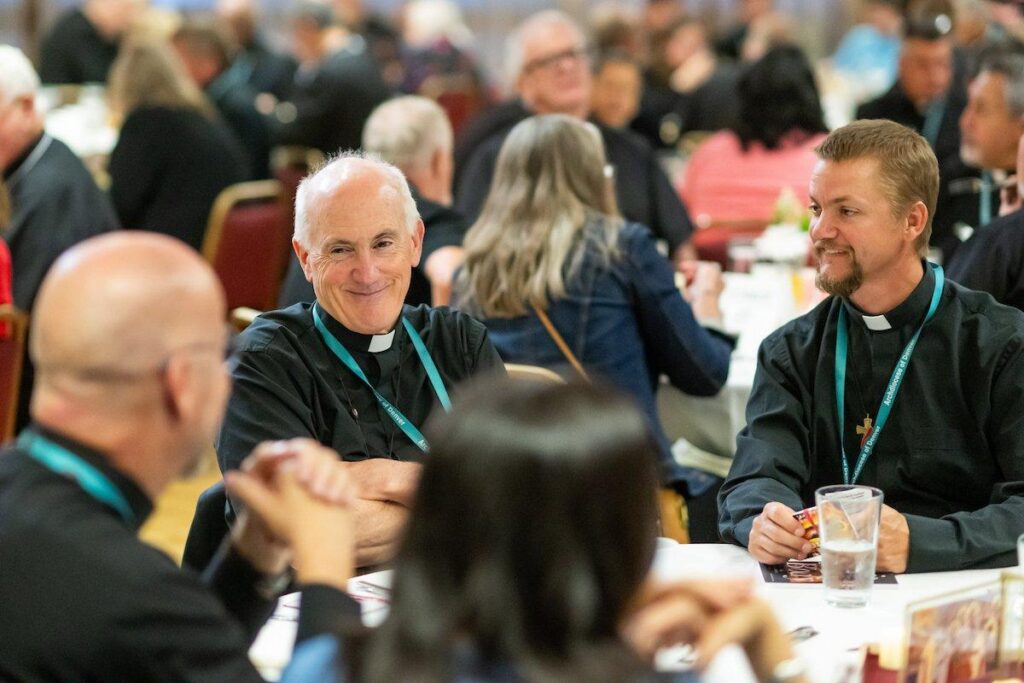
The certified peer supporters will undergo ongoing training and formation as the program develops. Deacon Martinez hopes to expand the network and potentially serve as a model for other dioceses nationwide.
Father Noonan, too, hopes the program “goes out to all of the dioceses of the United States. If bishops are interested, they can say, well, there is a peer support program for priests and deacons. And here’s a model, because I’ve seen it do so well in the fire service and law enforcement.”
Caring for those who care for others
For Deacon Magee, the program represents a cultural shift in how the church cares for those who care for others.
“When you feel like you’re out on an island with no one to talk to, that’s different than hearing, ‘Hey, I went through that too. Here’s what I did. Here’s how I coped,’” he said. “We’re not fixers. We can’t fix everyone’s problems. But we can walk with each other.”
The program operates under strict confidentiality protocols, ensuring clergy can seek support without fear of judgment or professional repercussions. Like its first responder counterpart, the peer support network serves as both a safety net and a preventive measure.
“The devil is real,” Deacon Martinez said simply. “We have to handle it. But Scripture reminds us we don’t handle it alone. Jesus didn’t send the disciples out alone; he sent them two by two. Even the apostles needed someone walking beside them.”
Sheryl Tyrol writes for Denver Catholic, the news outlet of the Archdiocese of Denver. This story was originally published by Denver Catholic and distributed through a partnership with OSV News.
The post Colorado diocesan-sponsored clergy peer support, resiliency program believed to be first in nation first appeared on OSV News.