WASHINGTON (OSV News) — A Senate subcommittee hearing held March 10 on President Donald Trump‘s executive order to restrict access to birthright citizenship guaranteed in the 14th Amendment to the U.S. Constitution examined arguments about what the amendment’s language regarding “subject to the jurisdiction thereof” meant when originally drafted.
While some senators at the Senate Judiciary Subcommittee on Border Security and Immigration queried about potential “birth tourism” from China, others heard testimony that the Trump administration’s bid to end birthright citizenship could actually put infants born to U.S. citizens under scrutiny as well as children born to immigrant parents.
Trump’s executive order is the subject of a case, Trump v. Barbara, which is scheduled for oral argument at the Supreme Court April 1.
The U.S. Conference of Catholic Bishops has submitted a friend-of-the-court brief in the case, arguing that ending the practice of birthright citizenship would weaken families and risk leaving children stateless, thereby making them targets for violence, trafficking and exploitation.
The 14th Amendment states, “All persons born or naturalized in the United States, and subject to the jurisdiction thereof, are citizens of the United States and of the State wherein they reside.”
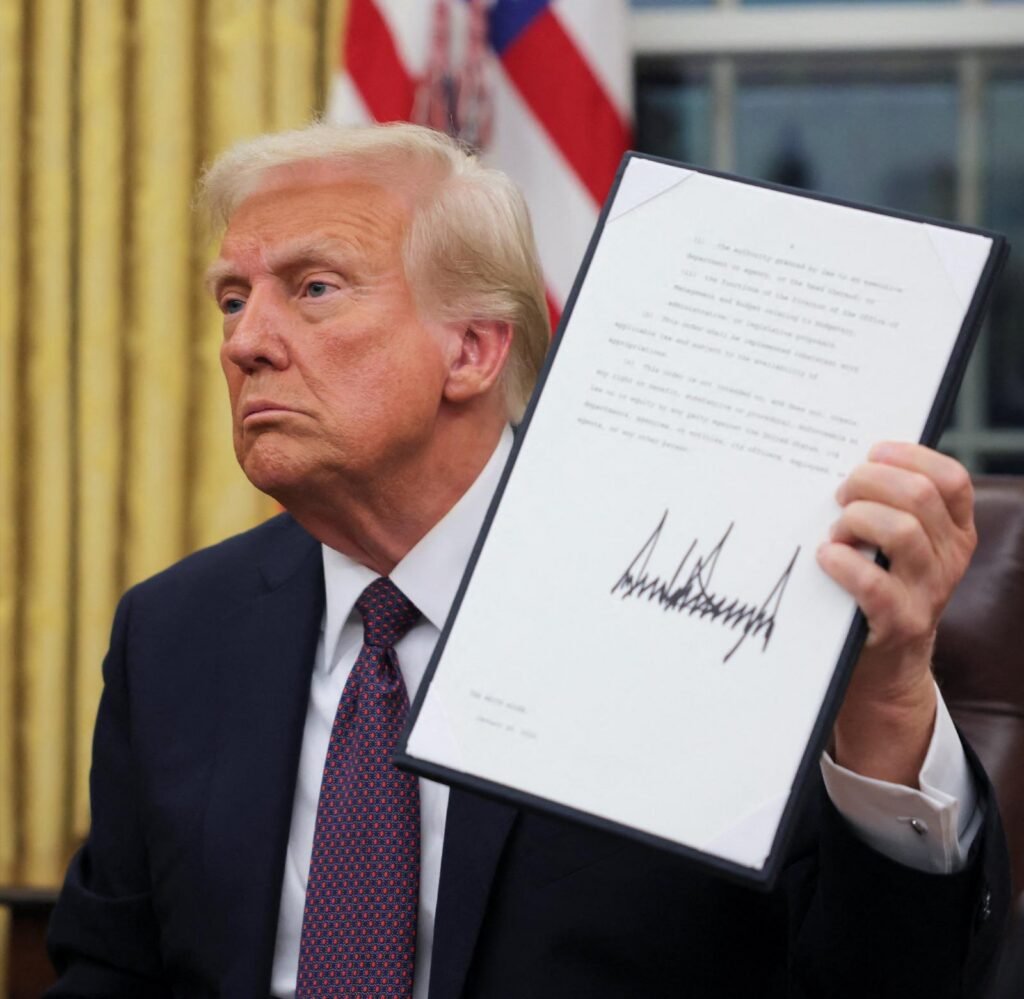
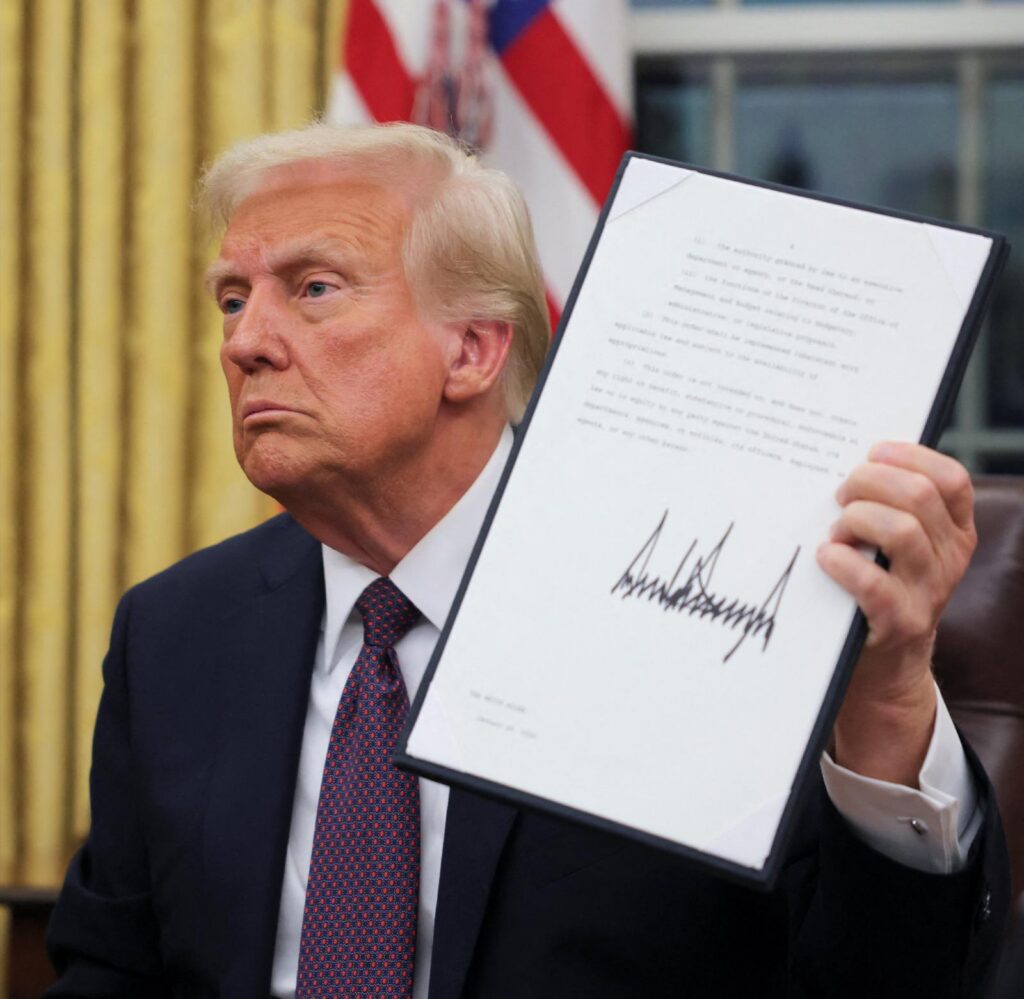
Trump’s executive order, signed on the first day of his second term in office Jan. 20, 2025, claims that the 14th Amendment, ratified in 1868, does not extend citizenship to everyone born in the U.S., but only grants children citizenship at birth depending on the citizenship or immigration status of their parents. The order said that after 30 days from the executive order’s date, only children born to at least one U.S. citizen or lawful permanent resident parent would automatically acquire citizenship.
The order, which was blocked from going into effect amid legal challenges, directed federal agencies to stop issuing passports, citizenship certificates and other official documents to children born in the U.S. to parents without legal status or temporary visa holders.
Intended meaning and potential implications of ending birthright citizenship
“The Fourteenth Amendment has always excluded from birthright citizenship persons who were born in the United States but not ‘subject to the jurisdiction thereof,’” the order stated.
Those words from the amendment, said Sen. Eric Schmitt, R-Mo., were “not written to provide incentive for a tourism industry or illegally crossing our borders.”
Schmitt claimed that over a million Chinese citizens “will spend their entire lives in China, but will be allowed to vote in American elections and receive government benefits.”
But under questioning, Peter Schweizer, president of the Tampa, Florida-based Government Accountability Institute, conceded he did not have government-backed data to substantiate the birth tourism charge. When asked about his claim that as many as 100,000 Chinese women a year are giving birth in the U.S., he said, “No one knows what the actual number is, and that is the challenge we face today.”
Charles J. Cooper, a former U.S. assistant attorney general for the Office of Legal Counsel under President Ronald Reagan, said the 14th Amendment’s language regarding “subject to the jurisdiction thereof,” which comes from the Civil Rights Act of 1866, is “ambiguous”; but he said it could be interpreted to include children of visitors “or illegal aliens.”
Under questioning from Sen. Peter Welch, D-Vt., Amanda Frost, a law professor at the University of Virginia School of Law, and director of its Immigration, Migration and Human Rights Program, said the Trump administration’s new interpretation of the 14th amendment would have far-ranging ramifications beyond immigrants and also affect citizens, as it purports to “restore” an interpretation of what the citizenship clause has always meant.
“The executive order denies citizenship not just to the children of undocumented immigrants or tourists, but also to the children of people that have been legally present in the United States for years, who are applying for green cards, who maybe receive a green card the day after the child is born — doesn’t matter,” Frost said.
“Under the executive order, that child is born a noncitizen, potentially stateless, denied all the benefits and privileges of citizenship, and theoretically, deportable on Day 1 of their life,” she said. “And then every single American family having a child will now have to prove their status before that child is considered a citizen by the U.S. government. That doesn’t matter if they go back to the Mayflower — that’s what everyone will have to prove going forward.”
Sen. Richard Durbin, D-Ill., said the Trump administration’s interpretation of the 14th Amendment, if confirmed by the Supreme Court, would create “a permanent underclass” of children of immigrants deprived of civil rights and legal protections.
Projections about effects
In 2025, projections from the Migration Policy Institute and Penn State’s Population Research Institute showed repeal “would significantly swell the size of the unauthorized population — now and for generations to come.”
According to that study, ending birthright citizenship for U.S.-born children with parents who are either unauthorized or are temporary immigrants (or a combination of the two) would increase the unauthorized population by an additional 2.7 million by 2045 and by 5.4 million by 2075. Its research found that every year, over the next 50 years, an average of about 255,000 children born on U.S. soil would start life without U.S. citizenship based on their parents’ legal status.
“The implications of ending birthright citizenship will have a devastating impact on immigrant families — especially those who cannot pass down their citizenship to their children,” Conchita Cruz, a lawyer and co-founder of the Asylum Seeker Advocacy Project, told OSV News.
“Ending birthright citizenship for children of immigrants means ending birthright citizenship as we know it for all U.S.-born children,” Cruz said. “If the executive order goes into effect, a U.S. birth certificate will no longer prove U.S. citizenship. All expecting families should be worried about what this could mean for their children.”
Kurt Jensen writes for OSV News from Washington.
The post Birthright citizenship order to impact more than children of migrants, Senate panel hears first appeared on OSV News.