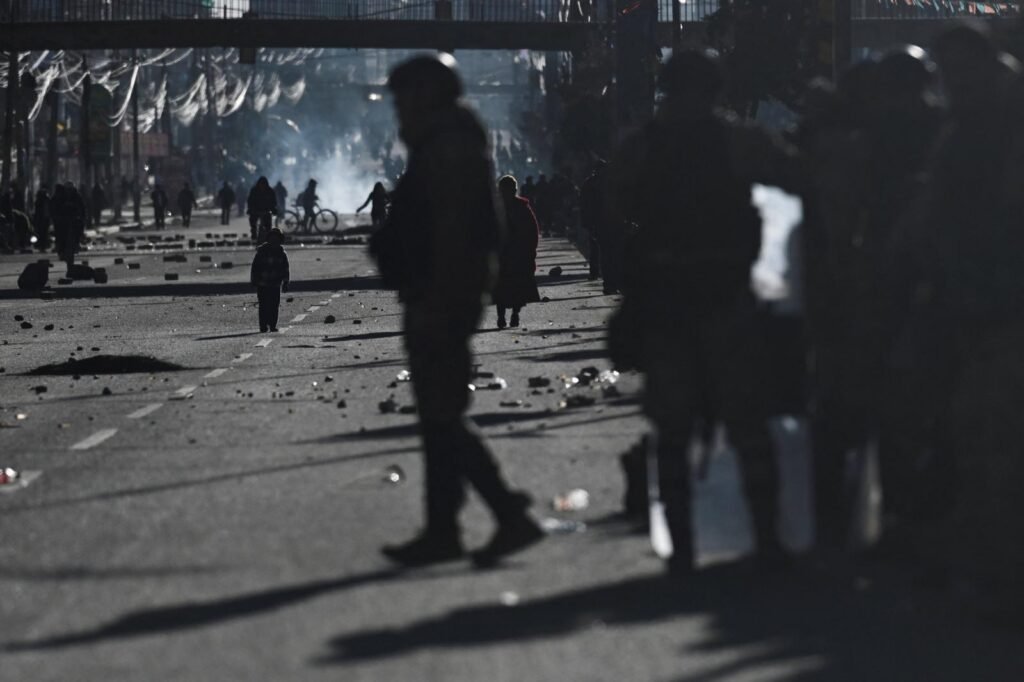
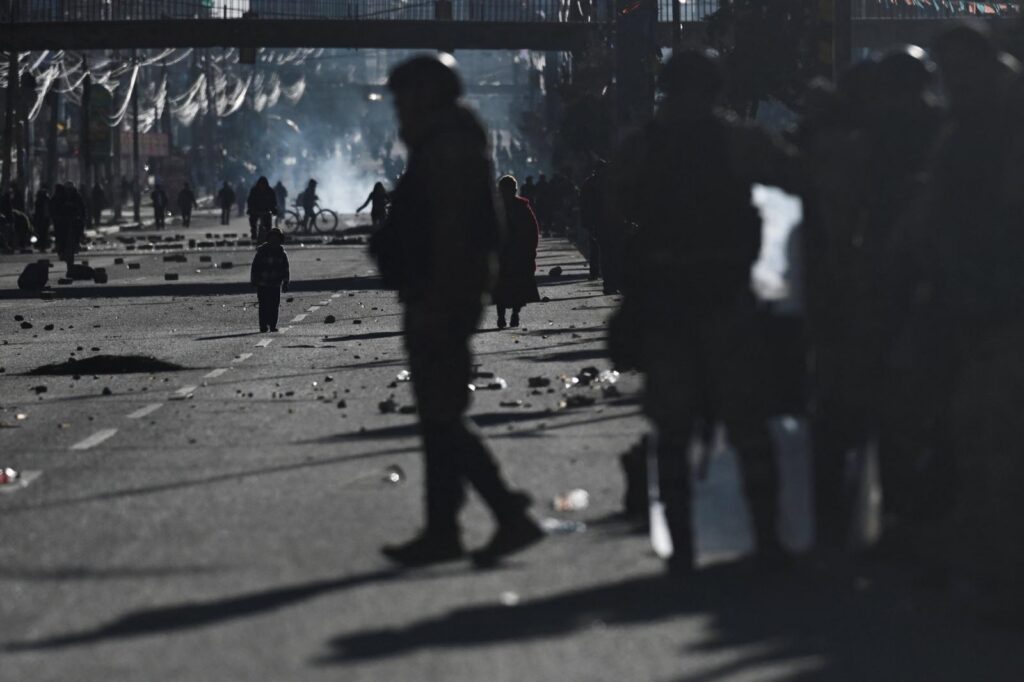
(OSV News) — Bolivia’s Catholic bishops appealed for dialogue and “humanitarian pauses” during disruptive protests, which have collapsed the highlands of the Andean country and threatened the administration of President Rodrigo Paz.
The Bolivian bishops’ conference called for talks “to avoid that tensions continue rising,” as protesters demand Paz’s ouster and blockades have caused shortages of food and fuel and been blamed for the deaths of three individuals, as ambulances have not been allowed free passage.
“This is a resounding call to all sectors in conflict to set aside political, personal or sectoral interests and seek common ground and agreement,” the Bolivian bishops’ conference said in a May 14 statement.
“The church recognizes the legitimate right of peoples to express their demands; however, no claim can ignore the suffering of thousands of families, especially the poorest and most vulnerable,” conference secretary-general Bishop Giovani Arana of El Alto — whose diocese neighbors the country’s administrative capital, La Paz, and has been beset by blockades — said in a May 11 statement.
“Bolivia needs to rediscover itself in the culture of dialogue and the pursuit of the common good. I also invite all Catholic faithful to intensify their prayers for peace and to promote gestures of fraternity,” Bishop Arana said.
Litany of grievances
Protests have exploded during May over a litany of grievances, including rising fuel prices, stagnant wages and proposed land reform laws — which were scrapped, but drew the ire of indigenous and rural residents.
Paz accused former President Evo Morales of also stoking protests to bring down the current government, which won power in the October 2025 election that wiped out Morales’ Movement Toward Socialism Party after nearly 20 years in power.
“Those from the past that attempt to destroy democracy are going to go to prison,” Paz said.
Morales, who clashed with Bolivia’s bishops while serving as the country’s first Indigenous Aymara president from 2006 to 2019 — and falsely accused the bishops of being accomplices in a supposed 2019 coup against him — organized a protest march of supporters to the national capital. He accused Paz — without presenting proof — of following U.S. orders in suppressing some of the manifestations.
A judge in Bolivia recently issued an arrest warrant for Morales after he failed to appear in court to face charges of human trafficking. He is accused of impregnating a girl, 15, while serving as president.
The protests come amid an economic crisis in Bolivia. Paz inherited a difficult economy beset by deep deficits, a weak currency and long lines at gasoline stations amid shortages. Analysts say the country is running out of funds after dramatically depleting its natural gas reserves, Bolivia’s main export.
Rafael Archondo, former editor of Fides, a news organization sponsored by Bolivia’s Jesuits, downplayed the former president’s role in the protests, telling OSV News many of the blockades were largely occurring in areas that voted for Paz in 2025.
‘The country needs calm’
At least 67 roadblocks have been established in Bolivia, according to media reports. It’s a common tactic in a mountainous country with various choke points that thwarts ground transportation and provokes shortages, increasing pressure on politicians, according to Archondo.
The blockades have already cost three lives, according to Bolivian media. Bishop Arana said ambulances have been unable to pass through barricades, while conditions are becoming dire in now isolated communities.
“No demand, however justified, should justify taking a life,” Bolivia’s bishops said. “It is still possible to find common ground. The country needs calm, responsibility, and a willingness to engage in dialogue to overcome this moment without further harming the population.”
David Agren writes for OSV News from Buenos Aires.
The post Bolivia’s bishops urge ‘humanitarian pauses’ as protests collapse country first appeared on OSV News.