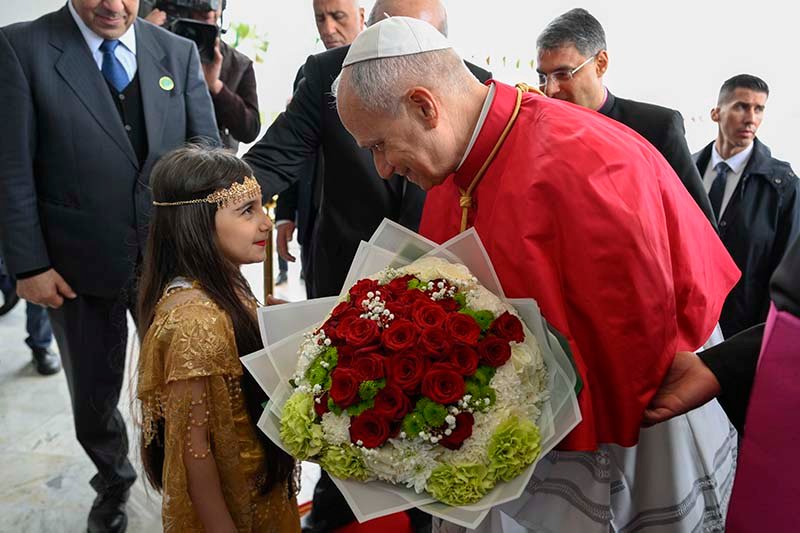
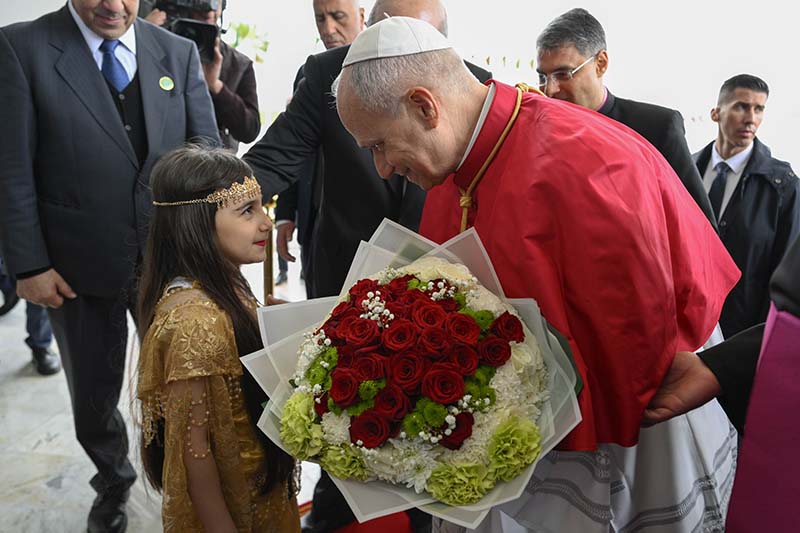
(OSV News) — As Pope Leo XIV makes his first apostolic journey to Africa April 13-23, some scholars of the Church’s past are hoping he won’t just make history — but that he’ll also help the wider Church recover that history.
“It’s important for us to get the message out that Western Christianity is fundamentally African, in the way that Eastern Christianity is fundamentally Greek,” Mike Aquilina, a prolific author on Church history, doctrine and devotion, told OSV News. “Africa is likely where our Latin liturgy developed, and we get our vernacular liturgy today from the Latin liturgy. So many of our traditions came out of Africa because Africa was a great center of Roman learning; of Latin learning.”
Firsthand knowledge of the continent
The pope — who traveled all over Africa before his May 8, 2025, election and so has firsthand knowledge of the continent — visits on this papal trip Algeria, Cameroon, Angola, and Equatorial Guinea, countries where Catholic residents vary from a fraction of the population to the majority.
In Algeria, there are no more than 9,000 Catholics among more than 45 million people; in Cameroon, Catholics account for approximately 1 in 3 of the 30 million population; in Angola, the Catholic Church is the largest single religious institution, where estimates identify 40%-55% of the country as Catholic; while Equatorial Guinea is one of the most Catholic countries in sub-Saharan Africa with nearly three-quarters of its people being Catholics.
“That is where our own Western tradition emerged,” emphasized Aquilina, author of “The Fathers of the Church: An Introduction to the First Christian Teachers.”
Latin tradition out of Tunisia, Algeria
He said, “The Latin tradition came out of places like Tunisia and Algeria, and even the Greek tradition was developed in profound ways in Alexandria, in Egypt, and in Ethiopia. It’s a land of important Christian origins that we all share.”
Each nation has its own attractions for Pope Leo, but Algeria is the land o fSt. Augustine of Hippo, who is regarded as the greatest of the Latin Church Fathers and is the inspiration for the religious order to which the pope belongs.
“St. Augustine was an African,” Aquilina said. “He spent most of his life in Africa. He spent a small part of his life in Italy, where he was baptized — and people associate him with Milan and Rome — but he was born and raised in Africa. He died in Africa; and he identified himself culturally with Africa.”
Christianity an ‘asset’ to Algeria
Bishop Michel Guillaud of Constantine-Hippone in Algeria told OSV News the pope’s presence will demonstrate that Christianity “is an asset and not a danger” to Algeria.
“The Holy Father has already visited Algeria twice, in 2003 and 2014, when he was prior general of the Order of St. Augustine,” Bishop Guillard told OSV News. “He is not coming primarily on a personal pilgrimage in the footsteps of St. Augustine, but to meet the Algerian people and to support his Church, drawing on the strong bond between them through the figure of Augustine.”
Still, for someone who, as Aquilina put it, is “fiercely, intensely devoted to St. Augustine,” Pope Leo will obviously relish again walking in the footsteps of his spiritual hero.
‘An element of personal piety’
“I’m certain that there’s an element of personal piety here,” Aquilina said. “But he also wants, in a sense, to bring the world to the feet of this African master — so we can learn and delight in Augustine the way he does.”
Catholic missionary activity in Cameroon dates to the 19th century; in Angola, the Church has taken on a key humanitarian role for migrants and refugees; and in Equatorial Guinea, there is also a robust missionary legacy.
Key themes of the apostolic journey will include peace, care for the poor, interfaith dialogue and the family.
Aquilina noted that conflict has unfortunately marked numerous African regions, including Algeria. A Vatican commission concerned with modern martyrs — created in 2023 by Pope Francis — found more people were killed in Africa for being Christian compared to other continents.
Lands with a Christian history
Tensions have included “active efforts to wipe out Christian memory in those places,” said Aquilina. “I think they’ve succeeded to some degree — and so the rest of us in the world have ceased thinking of them as Christian lands with a Christian history. But that’s false.”
The historically significant Kingdom of Kongo — which once included part of what is now northern Angola as well as Congo, the Republic of Congo and parts of Gabon — is a vibrant example of the long history of Catholicism in Africa.
Portuguese navigators reached Kongo, in the northwest, in 1483.
“When the Portuguese first reached this area — and after a couple of exchanges — Kongo sent a mission to Portugal,” John Thornton, professor of history and African American studies at Boston University, told OSV News.
‘There to teach their language’
“They lived there for four years. It was a group that included nobles and some children, so they could become bilingual,” he explained. “They studied Portugal; they studied Christianity; they learned to read and write; and they taught at least some people there to teach their language, as well.”
“Out of that,” Thornton continued, “they developed what you might call the first catechism, although we don’t have a text for it. When they came back, they had a big baptism of the elite; and then over the next few years, everybody else was brought in.”
The Portuguese, however, wished to retain control of the new Catholics to the detriment of the Church and its evangelizing mission.
Under the Portuguese perpetual clergy shortage
“They tended to block Kongo’s efforts to get its own diocese and its own bishop; they played politics with that,” Thornton said. “And then they never sent very many priests, anyway — so Kongo was perpetually, disastrously short of clergy.”
While in Angola, Pope Leo is visiting Muxima, a small town on the Kwanza River.
Every year between Aug. 31 and Sept. 1, over 1 million pilgrims visit Muxima to commemorate an 1833 apparition of the Virgin Mary. In 1924, its church, Nossa Senhora da Conceição da Muxima, was listed as a historical monument, and in 1996 added to the UNESCO World Heritage Tentative List.
Life of Queen Nzinga
Muxima is intertwined with the life of Queen Nzinga (1583-1663), who ruled the kingdoms of Ndongo and Matamba, located in present-day Angola. While she initially attempted diplomacy with Portugal — Portuguese explorers and missionaries first came to Ndongo in 1575 — she eventually ended up going to war as Portugal’s forces ravaged villages and enslaved tens of thousands of her people. Queen Nzinga threatened Portugal’s fortress in Muxima, and the war she waged over 30 years significantly disrupted the transatlantic slave trade, saving many African people from that fate.
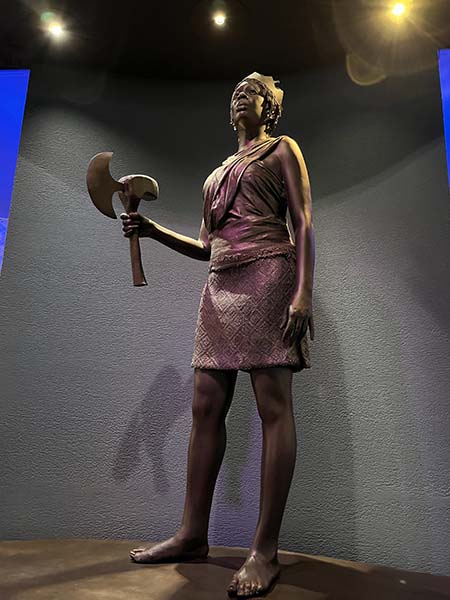
Over this period, Queen Nzinga struggled with her Catholic faith at times, given the scandal of Portugal trying to use Catholicism as a tool for its own colonial agenda; but she was aided by sympathetic Capuchin missionaries from Spain who also advocated for her before the Vatican.
‘Finished her days as good Christian’
“Nzinga was herself baptized — and she returned to the Church, more or less fully, in 1656, when she signed a treaty with the Portuguese,” Thornton said. “They finally decided they couldn’t defeat her,” he added, “And at that point, she returned to the Church and finished her days as a good Christian.”
The Angolan portion of the papal journey is also an opportunity for Pope Leo to get in touch with his own African roots. He has Afro-Creole heritage from New Orleans and Haiti through his maternal grandparents Joseph Martinez and Louise Baquié.
Many Black Catholics descend from Africans who were already practicing the Catholic faith when their European coreligionists enslaved and transported them to the Americas; they passed on not only their Catholic faith but also their long fight for freedom to their descendents.
Huge wave of Congolese sent to Louisiana
“A huge wave of Congolese were sent to Louisiana by the slave trade,” noted Thornton. “So the Louisiana coast has been influenced by the Kingdom of Kongo.”
Ultimately, Aquilina said he hopes Pope Leo’s apostolic journey can help global Catholics realize their debt to Africa.
“We’re dependent on African Latin tradition,” said Aquilina. “Even though we don’t acknowledge it anymore — even though we no longer see it — I think it’s good for us to recover our sight in this area.”
Kimberley Heatherington is an OSV News correspondent. She writes from Virginia.
The post Pope’s journey to Africa is chance to rediscover the Church’s African roots, say historians first appeared on OSV News.