(OSV News) — Lebanon has been gripped by panic and internal displacement crisis following Israeli evacuation orders as part of the U.S. and Israel–Iran war, with the country coming to reflect the growing pressure on Middle Eastern Christians, raising fears the conflict could force many to leave the region permanently.
Heavy Israeli airstrikes on Iran-backed Hezbollah and ongoing clashes, along with mass evacuation orders, have forced Christians across Lebanon to flee, leaving many homeless. Hezbollah joined Iran in the fighting despite a prohibition from the Lebanese government.
Nearly 700,000 displaced
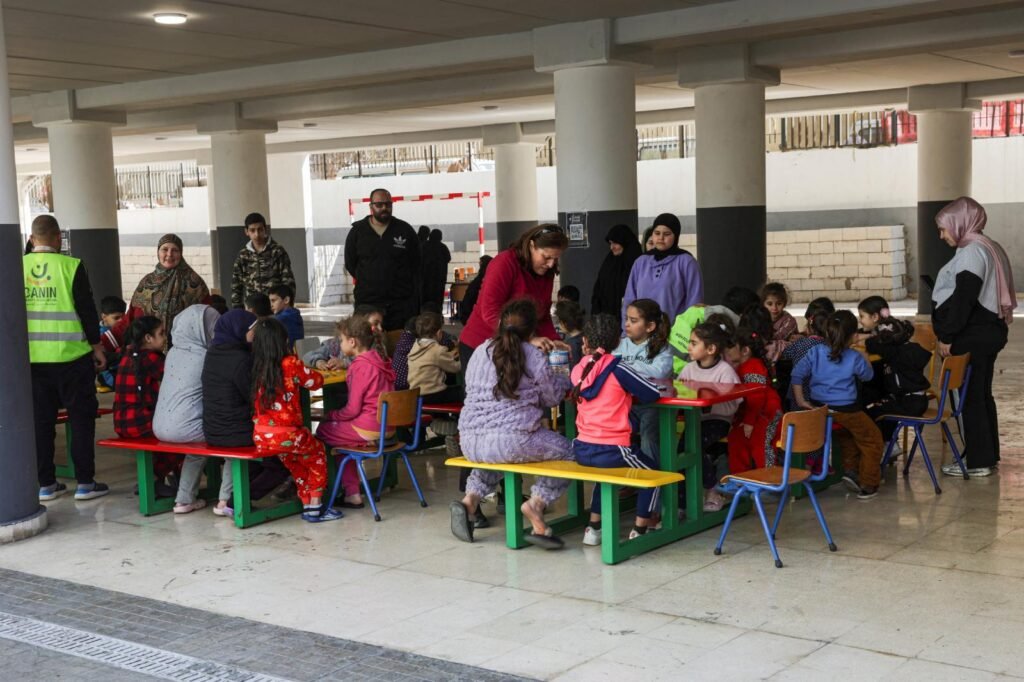
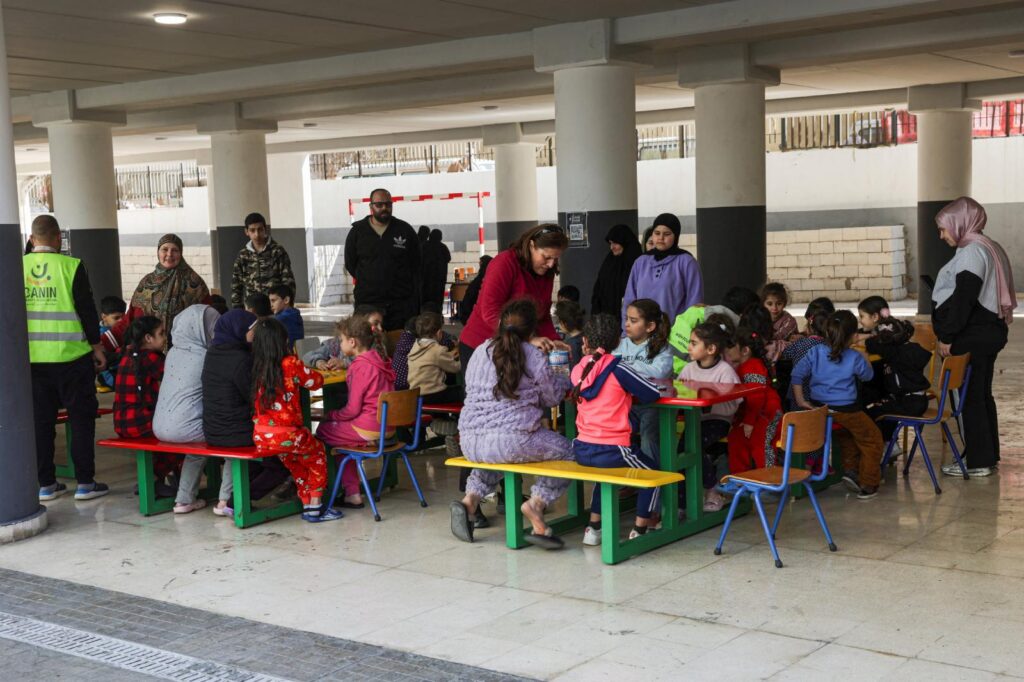
According to the United Nations, nearly 700,000 people have been displaced from southern Lebanon, south Beirut, and the Bekaa Valley as they seek refuge in Beirut. The violence has also killed more than 80 children.
Lebanese Prime Minister Nawaf Salam warned on March 6 of a “looming humanitarian disaster” after Israel ordered mass evacuations March 5 in south Lebanon and Beirut’s southern suburbs. He said Lebanon has been dragged into a devastating war it did not choose.
The economically stricken country is still recovering from the last war between Israel and Hezbollah ending in 2024.
Michael Constatin, CNEWA Pontifical Mission‘s regional director for Lebanon, Syria and Egypt, told OSV News that his organization is ministering to Christians who remain in the south, caught in the crosshairs between the Israeli military and Hezbollah, and to those who are now displaced in the Beirut area. It also helps people of other faiths.
Christians in southern areas
Speaking about Christians in the southern areas of Marjayoun, Bint Jbeil and Al-Mashhad, Constantin said: “They have all decided to stay to protect their homes. But those in Al-Mashhad were forced to evacuate their homes on March 10 and come to Beirut. Very few remain in that village. These people could be killed.”
“In Rmaich in Bint Jbail, there are 1,300 Christian families who have taken in another 300 Christian families displaced from other villages. They are surrounded by the Israeli army and by shelling. The village situation is very harsh,” he said, underscoring the danger.
CNEWA is providing this area and Marjayoun with fuel to empower water purification and generate power for cellphones and the internet to be able to communicate.
Israeli artillery tank fire
“People are afraid for attacks on these Christian villages,” Constatin explained, recounting at least three violent incidents involving Catholic clerics’ families in the south, including the killing of Lebanese Maronite Catholic priest Father Pierre al-Rahi in Qlayaa, Marjayoun, by Israeli artillery tank fire on March 9. Father al-Rahi refused to leave the village, protecting his community.
“This has made Christians very anxious, not knowing whether to stay or not,” the CNEWA head said, adding that this puts more pressure on Christians caught between Hezbollah militants and Israeli forces.
“If they leave immediately, some Hezbollah members will hide in their villages and their homes, and all the villages will be completely destroyed.”
Aiding displaced with food coupons
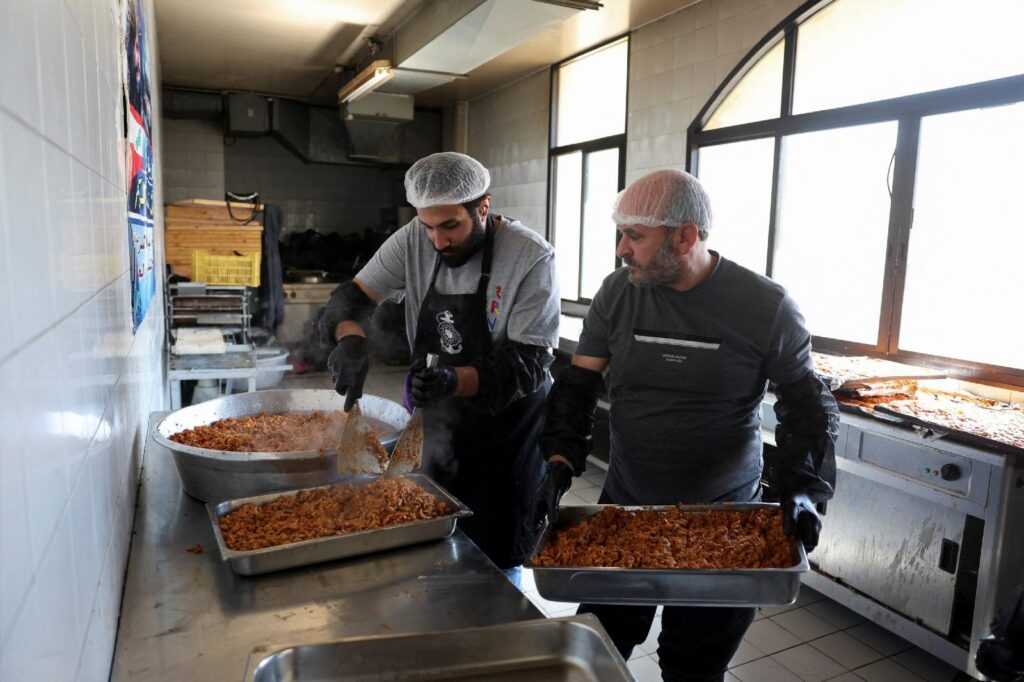
Meanwhile, CNEWA is aiding the displaced in Beirut with food coupons. Some 750 Christian families have now fled there. However, Constantin points out that they could soon be joined by an additional 3,000 more Christian families escaping fighting in the south as the humanitarian crisis grows.
Iraqi Christians are also coming under growing pressure as a result of the U.S. and Israel-Iran war. An explosive drone strike on the Chaldean Catholic complex in Ankawa, outside of Irbil took place on March 4, luckily damaging only the chapel and a block of apartments. “We thank God for the safety of everyone,” Chaldean Catholic Archbishop Bashar M. Warda told OSV News.
“When war erupts in the Middle East, we face another erosion, fast or slow. Do we stay? Do our children have a future?” Archbishop Warda further commented to the pontifical charity Aid to the Church in Need.
Multiple drone attacks on U.S. base
A U.S. military base near Irbil Airport has come under multiple drone attacks, while the United Arab Emirates consulate and a hotel frequented by foreigners in Irbil were also attacked by drones.
Father Emanuel Youkhana, a priest, or archimandrite, of the Assyrian Church of the East, who aids Christians and other Iraqi minorities in northern Iraq, told OSV News that the “situation in Irbil is escalating because of the American logistic base attached to the airport and the American consul in Irbil.”
“The Christian town of Ankawa is close to the airport and near the area of targeting. So, the church complex and the hotel were vulnerable to these attacks. North of Irbil is the American military base, Harir Air Base, and in the area are the camps of Iranian Kurdish opposition groups which especially became targets,” Father Youkhana explained.
“Both Iran and the Iranian-backed Shiite militias of Iraq carry out these attacks,” he said. “This is the concern that it can form the basis for internal conflict in the country.”
Fears over Christians being displaced
Father Youkhana said there are fears that Christians will once again face displacement. They were forced to flee their ancestral homeland of the Nineveh Plain in 2014 — after the brutal Islamic State group invasion — and the latest war evokes painful memories and trauma.
“Should the violence escalate, there are fears that this could lead to the displacement of Christians in Ankawa to seek refuge further north. And further south in the Nineveh Plain from where these Iran-backed militias are now operating.”
If Israel and/or the U.S. were to attack this area, once Iraq’s Christian heartland, “Christians would be forced to flee north to Dohuk,” the priest explained.
“In crisis times, vulnerable communities, like Christians, suffer more and feel greater uncertainty,” said Father Youkhana.
Dale Gavlak writes for OSV News from Amman, Jordan.
The post As humanitarian crisis looms in Lebanon, Mideast Christians face uncertain future first appeared on OSV News.